Unleashing the Tiger: A Craft Designer's Honest Review
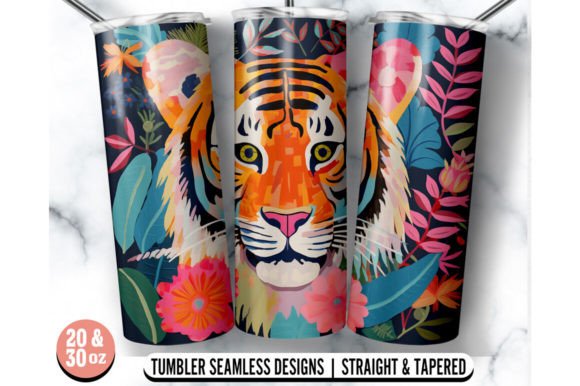
When you first open this embroidery file, the Tiger 20oz 30oz Skinny Tumbler Wrap announces itself with undeniable presence. It’s not a timid, sketchy graphic; it’s a bold, confident design built for impact. The layout, with its seamless and expansive coverage, immediately suggests this isn’t just a small accent piece. It belongs on a statement item, something meant to command attention. The mood it creates is powerful and sophisticated—a touch of wild elegance that feels both modern and timeless.
The Perfect Canvas: Where This Tiger Design Thrives
In my studio, evaluating a design means picturing it stitched out on real products. The scale here, with the 20oz template at 9.3 x 8.2 inches and the 30oz at 10 x 9.4 inches, tells me this is built for a centerpiece application. I immediately envision it on a high-quality heavyweight sweatshirt or a structured tote bag. The full-wrap nature means it’s designed to dominate the surface, making it ideal for boutique merchandise where visual identity is key. I recently used a similar-scale design for a custom embroidered tote bag for a small shop client, and the customer reaction was overwhelmingly positive—they loved how the artwork became the product’s defining feature.
This tiger design would translate beautifully into an embroidered patch, offering incredible versatility. A well-made patch with this level of detail could be applied to aprons, caps, or even as decorative accents on pillow covers or blankets. For a creative entrepreneur selling personalized gifts, this file could be the star of a holiday gift line—think luxurious embroidered pillow covers or sophisticated kitchen towels for a themed collection. The 300dpi resolution noted in the description suggests a focus on clarity, which is crucial when your finished product needs to look professional in photos for Etsy listings or digital product previews.
Navigating the Stitching Terrain: Practical Considerations
Performance in real-life embroidery situations is where theory meets the machine. For custom apparel like t-shirts or thinner baby clothes, caution is advised. The likely stitch density needed to render those powerful tiger details could be challenging on lightweight or stretchy fabrics. A strong stabilizer strategy is non-optional here. On textured fabrics like some blankets, the fill stitches defining the tiger’s form might lose some clarity, so a test run on a scrap of your intended material is a designer’s best practice.
Dark fabric backgrounds are a fascinating opportunity. This design, with its intricate lines and shapes, would rely heavily on thread color contrast. Imagine stitching this in a bright, metallic silver thread on a black sweatshirt—the effect could be stunning. However, on curved surfaces like caps, the large, seamless template might present hoop challenges. It’s essential to confirm your machine’s hoop size compatibility before committing to a project. The small details within the tiger’s features are what give it personality, but they also require your machine to be well-tuned; any misalignment in tiny lettering or decorative accents would be noticeable in the final product.
From Digital File to Customer Trust: The Value Translation
How does the Tiger 20oz 30oz Skinny Tumbler Wrap affect the perceived value of your finished work? A clean, crisp embroidery result from this file elevates a handmade product instantly. It moves from a “craft” to a professional-grade design asset. For small business merchandise, this level of execution builds customer trust—they see a polished, intentional design, not a generic motif. It enhances brand consistency if you’re building a line around bold, natural themes. The giftability of an item featuring this embroidery is high; it feels special and considered.
From a commercial embroidery perspective, using a design with this visual weight can increase buyer engagement in your online shop. A strong printable mockup featuring this tiger on a tumbler (as its intended use) or adapted onto apparel can capture attention quickly. However, this also raises the stakes: any stitching issues with clarity or density will be equally magnified and could hurt that professional presentation. The design’s recognition factor is strong—it’s a memorable graphic that people will associate with your shop if executed well.
A Designer’s Workshop Notes Before You Hoop
Before I run any new design for a client project or my own craft business inventory, I follow a mental checklist. For this tiger wrap, my notes would be: Test on scrap fabric first. This is paramount. Use a fabric similar to your final product to see how the fill stitches behave. Check thread color contrast meticulously. Pull physical thread spools and look at them against your fabric. Does that highlight color truly pop? Review the implied stitch density by examining the file preview. Are areas overly dense? This could lead to puckering. Confirm your hoop can accommodate the 9.3x8.2 or 10x9.4-inch area. Don’t assume.
Inspect the small details in your software. Zoom in. Are there tiny elements that might become lost or blurry in stitching? Test the design concept in black and white mockups. How does it look as a silhouette? This helps gauge its shape appeal. Compare how it would work on both light and dark fabric backgrounds. You might discover two completely different product lines. Use a proper stabilizer. For a design of this scale, this isn’t a step to skip. Finally, and crucially, check the licensing terms provided with the file. The product description doesn’t specify licensing, so you must verify whether your intended use—personal gifts, commercial projects, selling finished items—is permitted. Never assume.
The Final Impression: A Design With Commanding Potential
The Tiger 20oz 30oz Skinny Tumbler Wrap, from the Crafts and Graphics category, is a digital embroidery file with substantial potential for makers who work on a larger scale. Its seamless design and bold thematic personality make it a candidate for products that serve as focal points, not subtle additions. It feels destined for the kind of custom apparel or handmade product that gets noticed at a craft fair or featured in a successful Etsy listing.
Yet, its strength is also its demand. It asks for careful fabric selection, thoughtful thread choices, and meticulous machine setup. It rewards that effort with a finished product that can elevate your craft business’s perceived value and create truly memorable personalized gifts. In my hands, it wouldn’t be my choice for a quick, small baby item on thin cotton, but it would be my first choice for a luxurious embroidered sweatshirt or a statement tote bag that I’m confident will impress both my client and their eventual customer. Approach it with a professional’s preparation, and this tiger has the power to roar in your portfolio.